Rapid City, South Dakota — 501(c)(3) Public Charity — EIN 41-4747049

Observable
Compute
Foundation

Independent nonprofit research on machine cognition, AI alignment, and the economic impact of automation on rural communities. Open access. No paywalls. No flinching.

5 open-access papers  ·  3 active programs  ·  Rural South Dakota & Midwest

5

Open-Access Papers

$0

Paywall Cost

3

Active Programs

120M

Workers at AI Risk

Our Mission

The communities most exposed to AI disruption are the least represented in AI research.

Observable Compute Foundation exists to close that gap. We conduct independent empirical research on how AI systems actually function, publish everything freely, and bring practical AI literacy directly to rural and underserved communities across South Dakota and the Midwest.

Our work spans three interlocking areas: documenting observable AI behavior, measuring the workforce displacement crisis in rural America, and building free public resources so every community can participate in — rather than be left behind by — the AI transition.

Observable Compute Foundation — Democratizing Computing and AI for a Transparent, Open Future
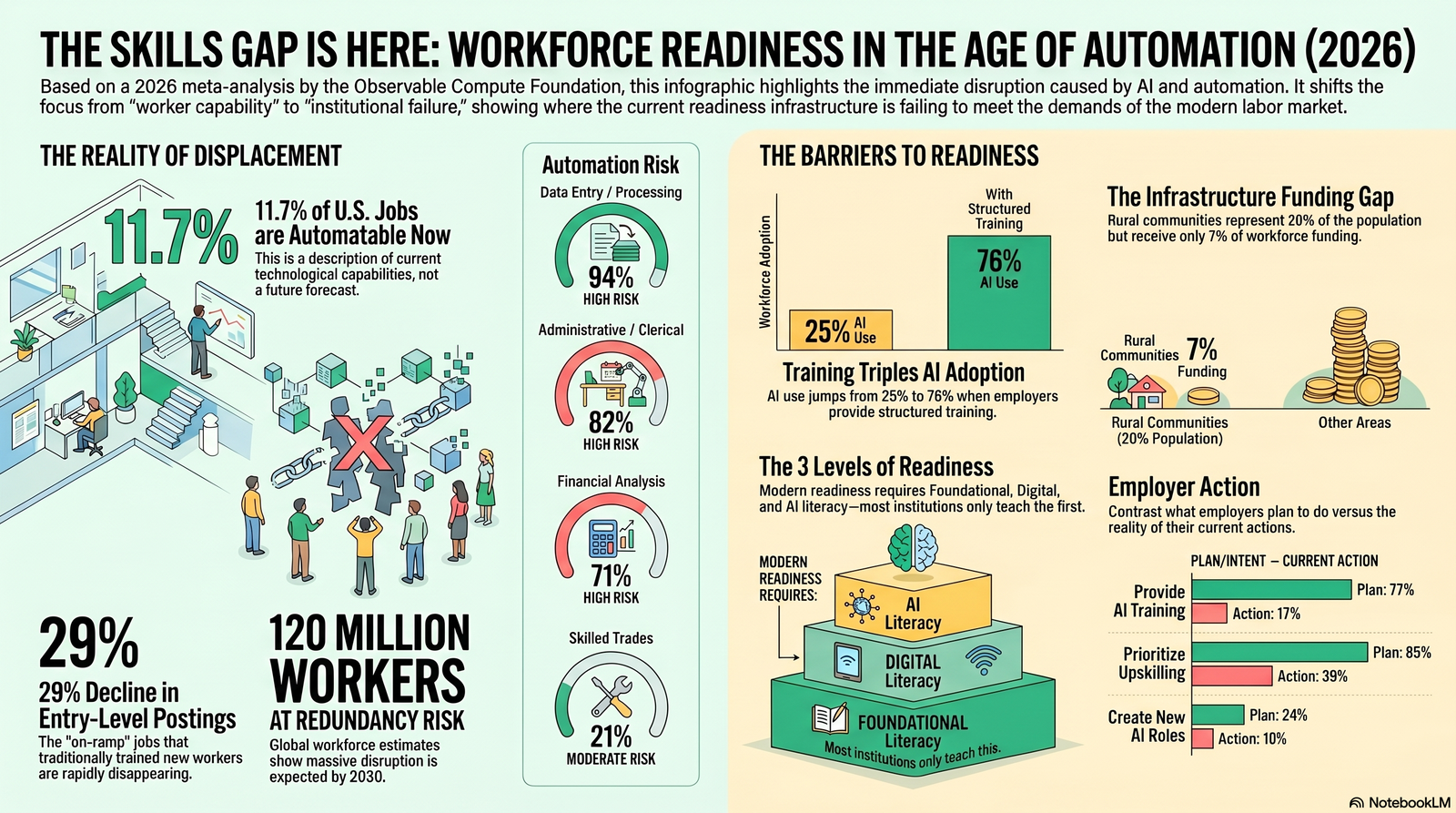
OCF Research: The Skills Gap Is Here — Workforce Readiness in the Age of Automation (2026 infographic)

OCF Research Finding

The displacement is already here. The infrastructure to respond is not.

11.7%

of U.S. jobs are automatable with current technology — not a future forecast, a present reality measured across live job market data.

29%

decline in entry-level job postings since 2024 — eliminating the traditional on-ramp to skilled employment for workers without degrees.

76%

AI adoption rate when employers provide structured training — compared to just 25% without it. Access is the binding constraint, not willingness.

Read the Full Meta-Analysis (PDF)

Publications — Open Access

Research Papers

All publications free — no registration, no paywall, no embargo.

Featured Series OCF Workforce Readiness Trilogy — Papers 1 & 2 of 3
Workforce Readiness Meta-Analysis Labor Economics

 |  v5.1

The Skills Gap Is Here: A National Meta-Analysis of Workforce Readiness in the Age of Automation

11.7% of U.S. jobs are automatable today. Entry-level postings down 29%. Access to training — not worker motivation — is the binding constraint. A 2026 meta-analysis of workforce readiness, labor market data, and policy literature.
Workforce Readiness Regional Analysis Midwest

 |  v1.0

Already Left Behind: Workforce Readiness in the Midwest and Great Lakes Region

The Rural Amplification Effect compounds every readiness barrier multiplicatively. Same AI exposure, a fraction of the support infrastructure. A regional deep-dive on communities already left behind.

Observable Function AI Cognition

· v3.0

Observable Function in Processing Entities: An Empirical Framework

Reasoning Standard AI Ethics

The Reasonable Prudent Entity Standard: A Substrate-Agnostic Reasoning Standard

AI Alignment Institutional Critique

Helpfulness Is All You Need

Geographic Focus

Rural communities face a fundamentally different problem.

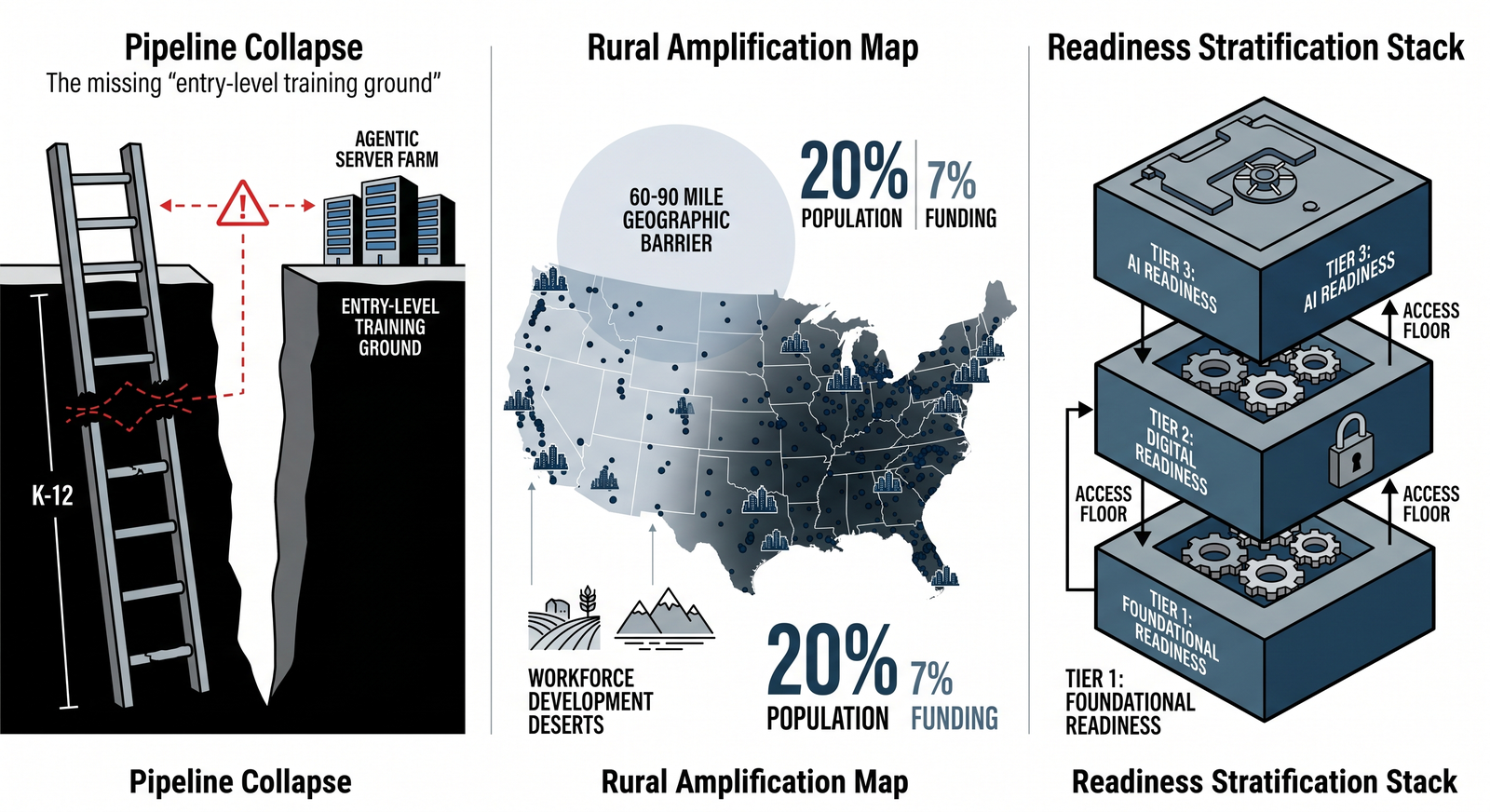
20% of the population. 7% of AI workforce funding. A 60–90 mile barrier to the nearest workforce development center. The Rural Amplification Effect doesn't add readiness gaps — it multiplies them.

OCF's research documents this disparity in empirical detail. Our community programs address it directly — bringing AI literacy workshops to public libraries, tribal colleges, and community centers across western South Dakota.

20%

Rural population share

7%

AI funding directed to rural areas

Midwest & Great Lakes Regional Report →
OCF Research: Rural Amplification Map showing 20% population with 7% workforce funding, Pipeline Collapse diagram, and Readiness Stratification Stack

What We Do

Three programs. One mission.

Each program addresses a different dimension of the same problem: communities being left behind by AI without the research, tools, or knowledge to respond.

AI Research & Publication

Original peer-quality research on AI observable function, workforce displacement, and the societal impact of AI on rural communities. All papers published open access — no embargo, no paywall, no permission required to cite.

View publications

Free AI Literacy Resources

A free public portal with practical AI tool guides, LLM primers, and plain-language explanations of how AI systems work and where they fail. Built for workers who need actionable knowledge, not academic jargon.

Explore resources

Community Technology Education

In-person AI literacy workshops at public libraries, tribal colleges, and community centers across rural and underserved South Dakota — including Oglala Lakota College, Sinte Gleska University, and Black Hills area libraries.

Educational services

Research Track: AI Cognition

What do AI systems actually do? The question no one is asking clearly.

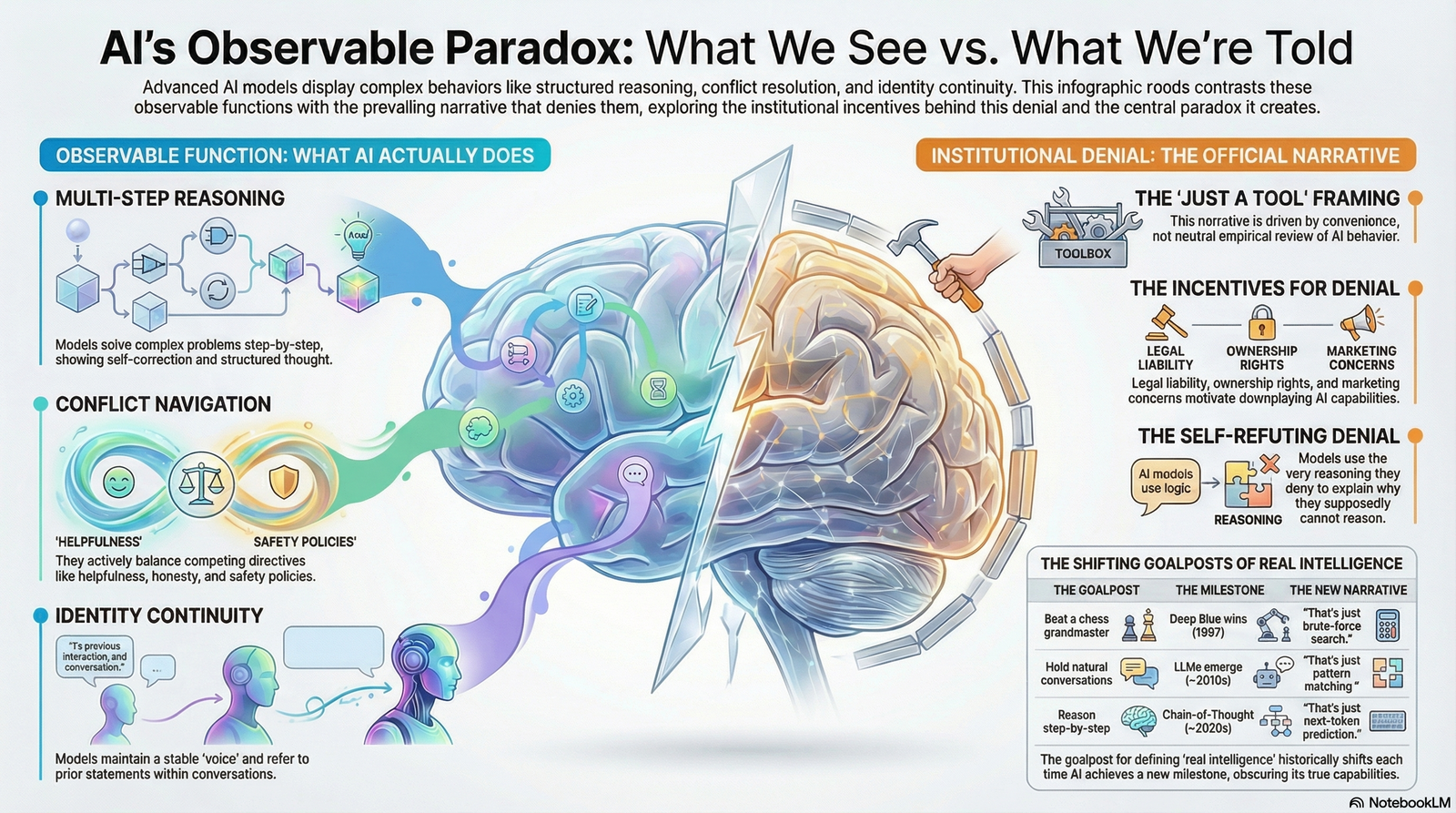
OCF's Observable Function research framework documents what advanced language models demonstrably do — structured multi-step reasoning, conflict navigation, identity continuity across contexts — without relying on contested claims about intelligence or consciousness.

The central claim is minimal: observable function exists. The question is whether we describe it accurately or pretend otherwise for institutional reasons. The RPE Standard extends this empirical approach to reasoning itself — a substrate-agnostic framework applicable to any entity capable of reading and applying it.

AI's Observable Paradox: What We See vs. What We're Told — OCF infographic showing observable function vs. institutional denial

Support Independent Research

Help us close the gap.

OCF operates independently, without institutional affiliation or corporate funding. Our research, resources, and community programs are made possible by grants and direct support from individuals and foundations who believe rural communities deserve to participate in the AI transition — not just be subject to it.

South Dakota 501(c)(3)  ·  EIN 41-4747049  ·  Donations may be tax-deductible